Historical Portrait
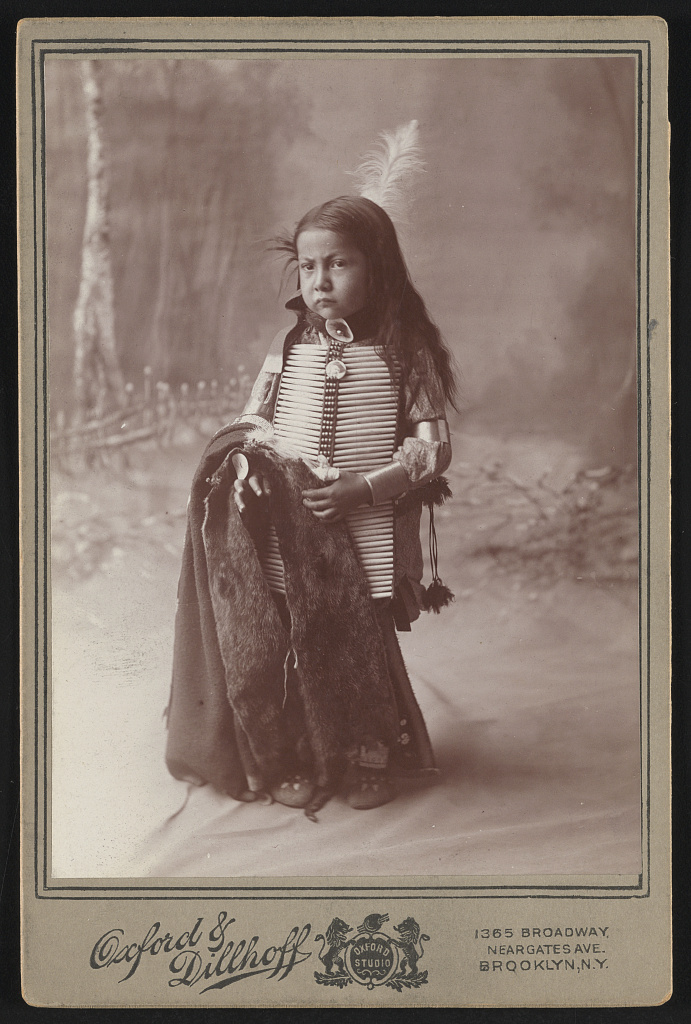
Tommy Come Last
Archive record
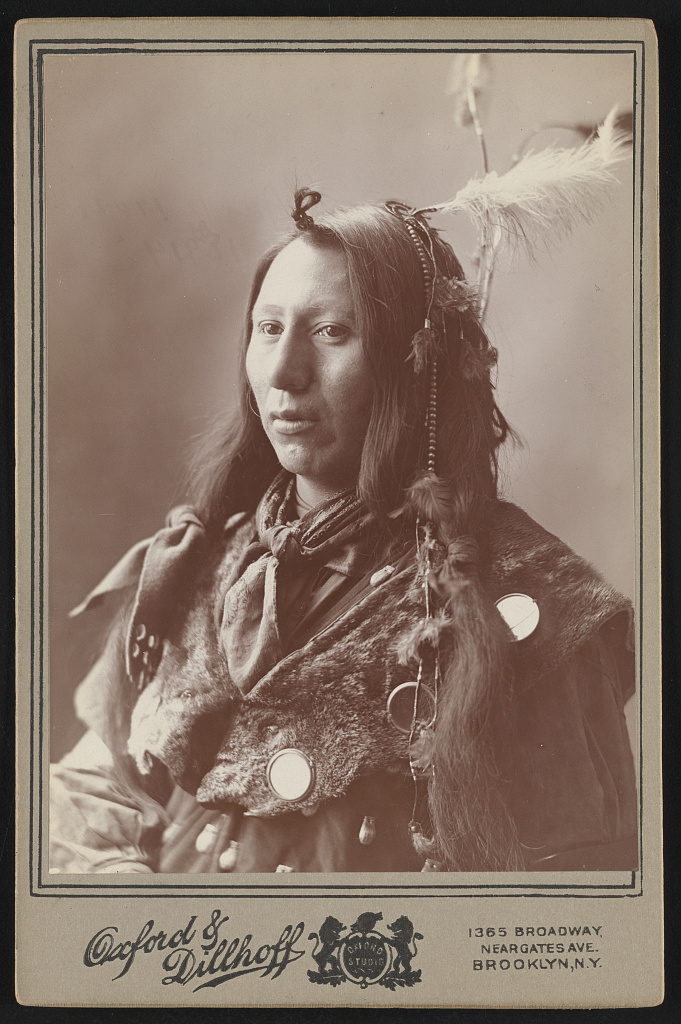
1 photograph : gelatin silver print ; sheet 13.8 x 10 cm, mount 16.6 x 11 cm (cabinet card format) | Photograph shows portrait of a Native American Oglala Lakota boy in traditional dress, who performed with the Buffalo Bill Wild West Show, posed in front of a painted backdrop showing forest scene.
About this photograph
This cabinet card was made by Oxford & Dillhoff and shows a boy identified in the archive record only as Tommy Come Last, an Oglala Lakota performer with Buffalo Bill's Wild West.
The Oglala are one of the seven divisions of the Lakota. The Great Sioux Reservation established by the Fort Laramie Treaty in 1868 was divided by Congress in 1889 into Pine Ridge and several smaller reservations in South Dakota, opening the remaining land to settlement.
Buffalo Bill's Wild West toured from 1883 and employed hundreds of Native performers, many recruited from Pine Ridge. The shows presented Indian attacks for white audiences and relied on stereotype, but also offered wages and allowed travel when federal policy was working to suppress language, dress, and ceremony on reservations. What that employment meant remains debated.
Photographs of Native people from this period were almost always made by non-Native photographers for commercial sale, surveys, or study. Sitters had little control over how images were used. Catalogue records typically name the photographer while the subject goes unidentified or is noted only by nation. The archive supplies no further information about this boy beyond his performance name.
Compiled from the catalogue record and reference notes on the formats and events involved. The archive record above is the primary source.
About the format
Rights & Attribution
Explore
More from the 1900s
![[Miss Two Bears, half-length portrait, facing slightly left], 1902 (Library of Congress)](/api/img/miss-two-bears-half-length-portrait-facing-slightly-left-1902-KmPnmWMod9xIiU8i2g6T.jpg)