Historical Portrait
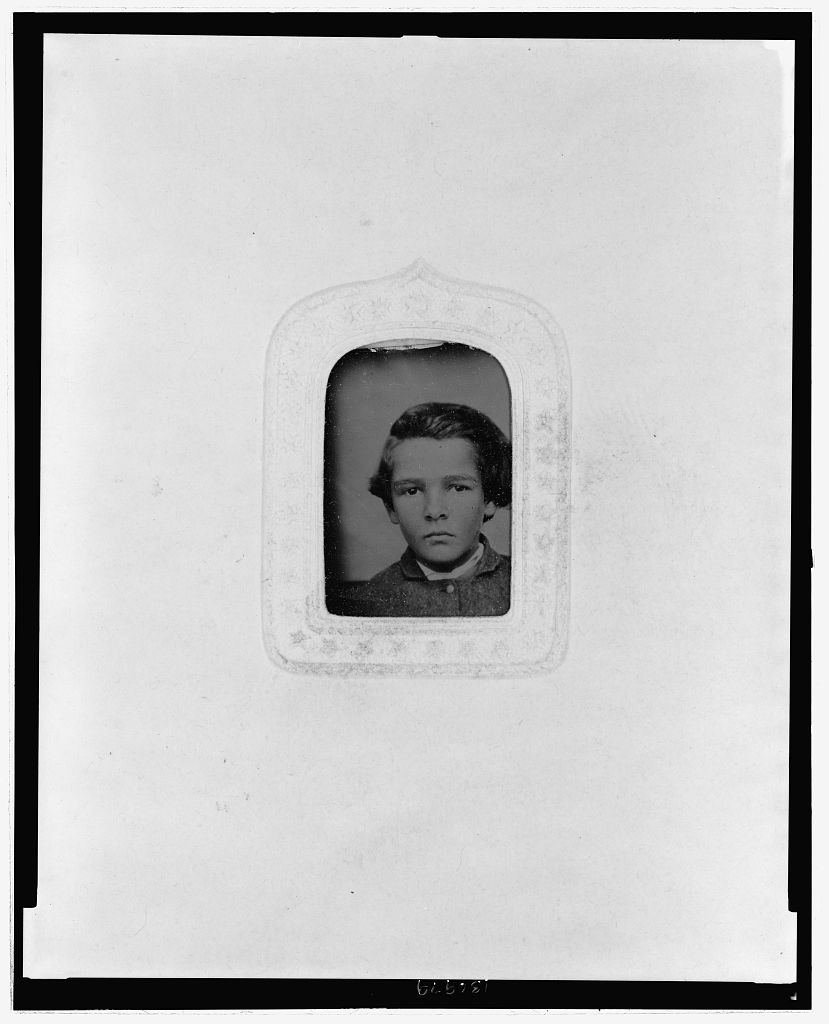
[Unidentified young boy with cased photograph]
![[Unidentified young boy with cased photograph], 1860 (Library of Congress)](/api/img/unidentified-young-boy-with-cased-photograph-1860-MkivcqVFEiSc3RqMaSvu.jpg)
Archive record
1 photograph : hand-colored ambrotype ; plate 82 x 69 mm (sixth-plate format), case 95 x 83 mm.
About this photograph
This hand-colored ambrotype shows an unidentified young boy holding a cased photograph. The image was made by Charles R. Rees in 1860.
The ambrotype process created a one-of-a-kind photograph on glass, often hand-tinted with color and housed in a protective case. The sixth-plate format was a common size for portrait work of this era.
Studio portraiture held particular significance in Black communities during this period, when published images of African Americans were largely dominated by caricature. Sitting for a formal portrait was a deliberate assertion of dignity and standing. The absence of the sitter's name reflects the record-keeping practices of the time, which frequently left Black sitters unnamed while identifying white ones.
The boy's inclusion of another cased photograph within this portrait suggests the importance of family connections and photographic keepsakes in preserving memory and lineage.
Compiled from the catalogue record and reference notes on the formats and events involved. The archive record above is the primary source.
About the format
Rights & Attribution
Explore
More from the 1860s
![[Hesler photographs of Lincoln.], 1860 (Library of Congress)](/api/img/hesler-photographs-of-lincoln-1860-1Q8Jvm3wf8fAzKX8GMAC.jpg)
![[Portrait of man, facing right], 1860 (Library of Congress)](/api/img/portrait-of-man-facing-right-1860-5lLblWVIGgt6JOarhVpM.jpg)
![[David Flavel Jamison, president of the Secession Convention and South Carolina Secretary of War], 1860 (Library of Congress)](/api/img/david-flavel-jamison-president-of-the-secession-convention-and-south-carolina-se-BieCvf6dA5qlSIkbymR6.jpg)
![[David Flavel Jamison, president of the Secession Convention and South Carolina Secretary of War], 1860 (Library of Congress)](/api/img/david-flavel-jamison-president-of-the-secession-convention-and-south-carolina-se-FUR1QlPQMky9RqqzzRVQ.jpg)